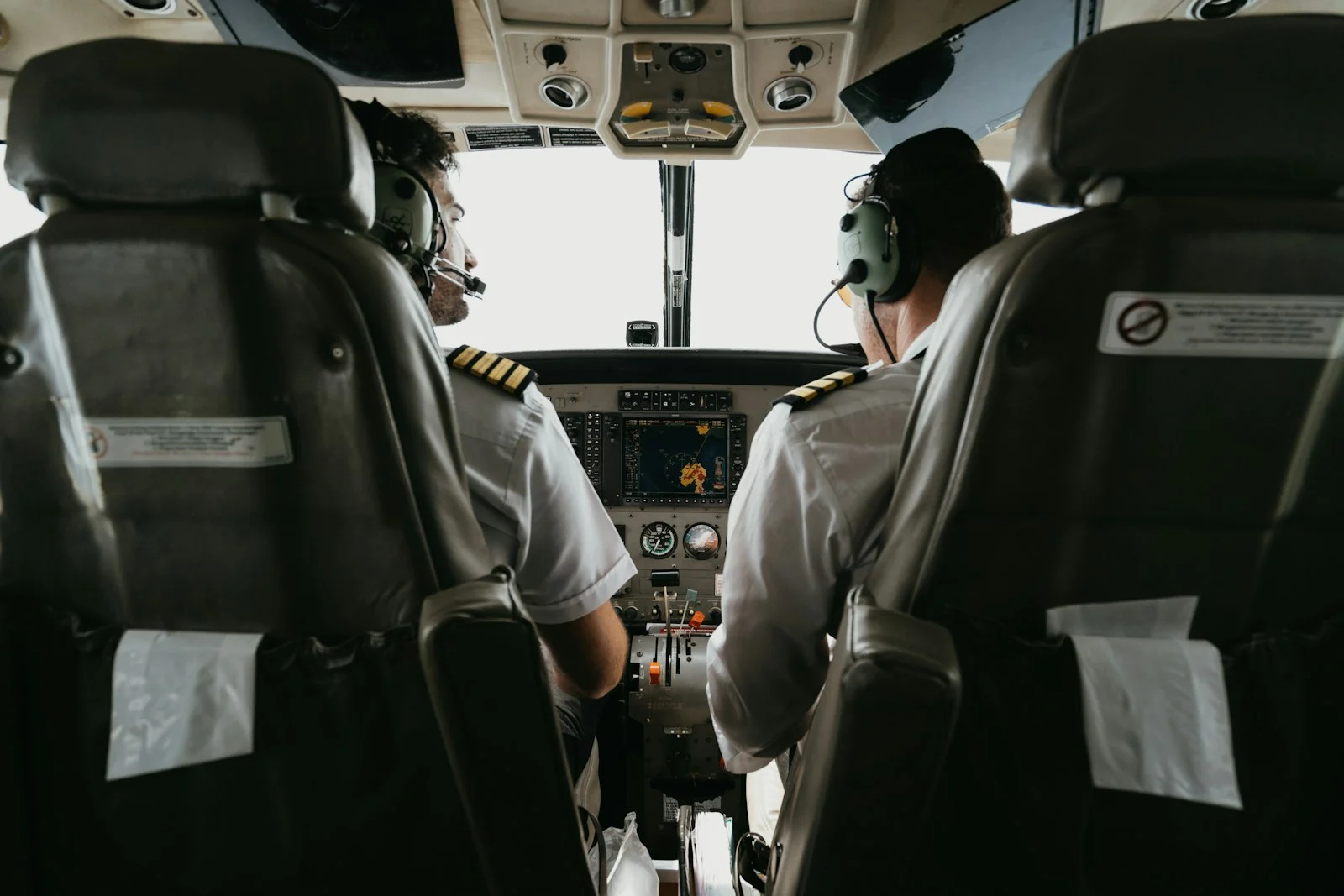
Standard phraseology is a beautiful thing. It is compact, unambiguous and shared across the world. It is also, by design, a closed set - and the moment something happens that the set does not cover, you are in plain English whether you planned to be or not.
That gap is exactly where language assessments live. Describing a failure you have never had to describe. Negotiating an alternative when the one offered does not work. Explaining a passenger situation to a controller who cannot see what you can see.
Eight things worth being able to say without hesitation: what has happened, in one sentence; what you need, in one sentence; what you can and cannot accept; how much time or fuel you have; a request for repetition that does not sound like panic; a paraphrase of what you just heard, to confirm it; a warning that you will be off frequency; and a clear statement that a previous message was wrong.
None of that is advanced English. All of it is language that has to be automatic, because it arrives on the worst day. Rehearsing it in a lesson is far cheaper than improvising it at 3,000 feet.