ICAO Level 4, 5 and 6 preparation - online, worldwide
Your licence should never be limited by your English.
One-to-one Aviation English coaching for pilots, air traffic controllers and cabin crew preparing for an ICAO language proficiency assessment and for the day the routine stops being routine.
The first placement call is free and there is nothing to sign. Lessons run on Zoom, with evening and weekend slots across most time zones. If your schedule will not take lessons, I send you the task materials to record in your own time and a written speaking report gets you marked without booking anything.
10 years teaching English to professionals in four countries
10
years teaching English professionally
4
countries taught in: UK, Spain, Italy, Russia
6
ICAO descriptors trained, one by one
1:1
lessons built around your licence and your route
Why crew get the rating they did not expect
Good English and ICAO English are not the same thing.
Plenty of confident, experienced aircrew walk out of a language assessment with a rating they did not expect. Almost always for the same four reasons.

Your rating is your weakest descriptor
Six areas are scored separately and the lowest one becomes your final rating. A fluent speaker can be held at Level 4 by pronunciation alone. We find the descriptor that is costing you the level and work on it deliberately, instead of just chatting.
Phraseology runs out exactly when you need it
Standard phraseology covers the routine. Assessments, like real emergencies, are built from everything else: a passenger taken ill, a bird strike, a diversion to an unfamiliar field. Plain English is what is actually being measured.
Comprehension under load
Understanding a fast native speaker, an unfamiliar accent and a busy frequency is a trainable skill. We practise with real recordings and degraded audio until unexpected turns stop being a surprise.
Interaction, not monologue
Assessors listen for how you check, clarify, paraphrase and confirm when a message goes astray. That is a set of phrases and habits you can rehearse - most candidates never do.
The ICAO rating scale
Where you are now, and where you need to be
The ICAO rating scale runs from 1 to 6. Level 4 is the operational minimum for international flight and for controllers handling international traffic. Re-assessment intervals are set by your own authority; the intervals below are the ICAO recommendation.
The minimum
Level 4 Operational
You can handle work-related topics and unexpected turns with reasonable accuracy. Errors sometimes interfere, and a strong accent or a busy frequency can still cause a breakdown.
Re-assessment recommended every 3 years
The comfortable place to be
Level 5 Extended
You handle the unexpected with ease, your vocabulary stretches to unfamiliar situations, and errors rarely interfere with meaning. Most airlines see Level 5 as real operational safety margin.
Re-assessment recommended every 6 years
The finish line
Level 6 Expert
Consistently accurate, flexible and easy to understand, even with an unfamiliar accent. Idiomatic and nuanced language is used appropriately.
Usually no further testing, subject to your authority
The six descriptors we train
01
Pronunciation
Accent is fine. Interference is not. We target the specific sounds, stress patterns and rhythms that make your transmissions hard to read.
02
Structure
The grammar that carries meaning under pressure: tenses for reporting, conditionals for intentions, question forms for clarification.
03
Vocabulary
Technical range plus the paraphrase skills that rescue you when the exact word will not come.
04
Fluency
Natural pace, useful fillers, and recovery from a false start without losing the message.
05
Comprehension
Listening work on real ATC audio, varied accents, degraded quality and non-routine content.
06
Interactions
Immediate, appropriate and informative responses - reading back, checking, confirming and resolving misunderstandings.
Training
Courses
Every course starts from a diagnostic, not from page one of a textbook. Length is a guide - some people need six weeks, some need six months.

First assessment, or a rating that came back below 4
Level 4 Readiness
A structured route to the operational minimum, built around the descriptor that is holding you back.
- Core aviation vocabulary and functional grammar
- Non-routine scenarios: technical, medical, weather, ATC
- Listening work on live and archived ATC audio
- Weekly written feedback against all six descriptors
12 weeks, 2 lessons a week · Ask about this course

Pilots and controllers stuck on a 4 they keep having to renew
Level 5 and 6 Advancement
The gap between 4 and 5 is rarely vocabulary. It is precision, flexibility and how you behave when a message breaks down.
- Paraphrase and repair strategies under time pressure
- Accent and stress work for consistent intelligibility
- Complex reporting, hypotheticals and intentions
- Extended interviews with unfamiliar accents
10 to 16 weeks · Ask about this course
Crew who are strong on standard calls and lost outside them
Phraseology to Plain English Bridge
The exact point where standard phraseology stops and you have to explain yourself. Drilled until it is automatic.
- Describing a technical failure in plain language
- Negotiating with ATC: requests, refusals, alternatives
- Emergency and urgency communication
- Handover, briefing and debriefing language
8 weeks · Ask about this course

Anyone with a test date in the diary
Live Mock Assessment and Report
A full simulation in the format of the test you are actually sitting, followed by an honest written verdict.
- TEA, ELPAC, RELTA and EALTS style formats
- Recorded, so you can hear what the assessor hears
- Descriptor-by-descriptor breakdown with an estimated rating
- A short, prioritised plan for the weeks before the test
One 60 minute session · Ask about this course

Anyone who wants marking without booking a lesson
Written Speaking Assessment
I send you the task materials, you record them on your phone in your own time, I mark them and send back a detailed written report. No scheduling, no time zones, no lesson to sit.
- Prompts released after payment, so nothing can be rehearsed
- One take, camera on, recorded on your phone
- Marked against all six ICAO descriptors, with an estimated rating
- A written report naming the two things to fix first
Record when it suits you, report in 5 working days · Ask about this course

Cabin crew, dispatchers, ramp and ground handling teams
Cabin Crew and Ground Staff English
Safety and service English for the people who talk to passengers, and to the flight deck, all day.
- Safety announcements and passenger briefings
- Difficult passengers and medical situations
- Clear, calm communication with the flight deck
- Interview preparation for airline recruitment
Flexible · Ask about this course

Training departments and academies
Airline, ATS and Flight School Programmes
Group programmes with placement testing, a shared syllabus and progress reporting for your training manager. Previous corporate clients include KPMG, Aggreko, Estrella Galicia, Gazprom and LukOil.
- Placement testing and cohort grouping
- Syllabus mapped to the ICAO rating scale
- Moodle or your own LMS
- Termly progress reports for management
By agreement · Ask about this course
The route
How it works
01
A free 20 minute placement call
A short conversation, one non-routine scenario and a listening check. No cost, no obligation, and you get an honest opinion on the level you are at now.
02
A written diagnostic
Within 48 hours you get your six descriptor scores, an estimated ICAO rating and the two things that will move you fastest.
03
Lessons built for you
One-to-one online. Materials drawn from a large personal archive of aviation and exam resources, plus real ATC audio and current incident reports. If your schedule will not take regular lessons, I send you the task materials to record in your own time and a written speaking report gets you marked without the timetable.
04
Mock test, then the real one
We do not book you into a test until a full simulation says you are ready. Then you sit it knowing exactly what is coming.
AE
Anil Dave
Aviation English instructor - TEFL certified - London
About your teacher
Ten years, four countries, one obsession: English you can actually use
I am a British native speaker and certified ESL instructor based in London. Since 2014 I have taught English professionally in the United Kingdom, Spain, Italy and Russia to aviation professionals, legal professionals and corporate teams at KPMG, Aggreko, Estrella Galicia, Gazprom and LukOil.
That work has always had the same shape: a professional with real expertise, a high-stakes situation in English, and a gap between the two. Aviation is that problem in its purest form, because the consequences of a misunderstanding can have serious safety implications.
So my lessons are not general conversation with a few aviation words dropped in. They are built on the ICAO rating scale, on real radiotelephony, on non-routine scenarios, and on the specific descriptor that is costing you your level. I keep a large archive of teaching material - books, audio and video - and I make the plan fit you, not the other way round.
Qualifications and background
- 120-hour TEFL certificate (TEFL.org.uk, 2016, renewed 2025)
- BA (Hons) History, Lancaster University
- Certificate in Quantitative Techniques and Statistics, Birkbeck, University of London (Distinction)
- Cambridge exam preparation: IELTS, CAE, FCE, PET, KET
- TOLES legal English and technical English for software engineers
- Enhanced DBS check and Level 3 First Aid at Work
- Online delivery on Moodle, Zoom and Google Meet
What students say
Genuine comments from present and former students.
A straightforward course with plenty of practice. Anil also my underlying grammar problems
Grigory, A · First Officer, A320
Helped me retake my ICAO level 4 exam. A useful course.
Pavel, J · Air traffic controller
A good course with exam practice. Thanks.
Marcos · First Officer
Blog
Latest writing
Short, practical pieces on the ICAO rating scale, plain English for non-routine situations, and what actually moves a descriptor.
-

44% of pilots who sat ELPAC in 2026 stopped exactly at Level 4
EUROCONTROL's 2026 ELPAC figures show 44% of pilots stopping exactly at Level 4, against 19% of controllers.
-
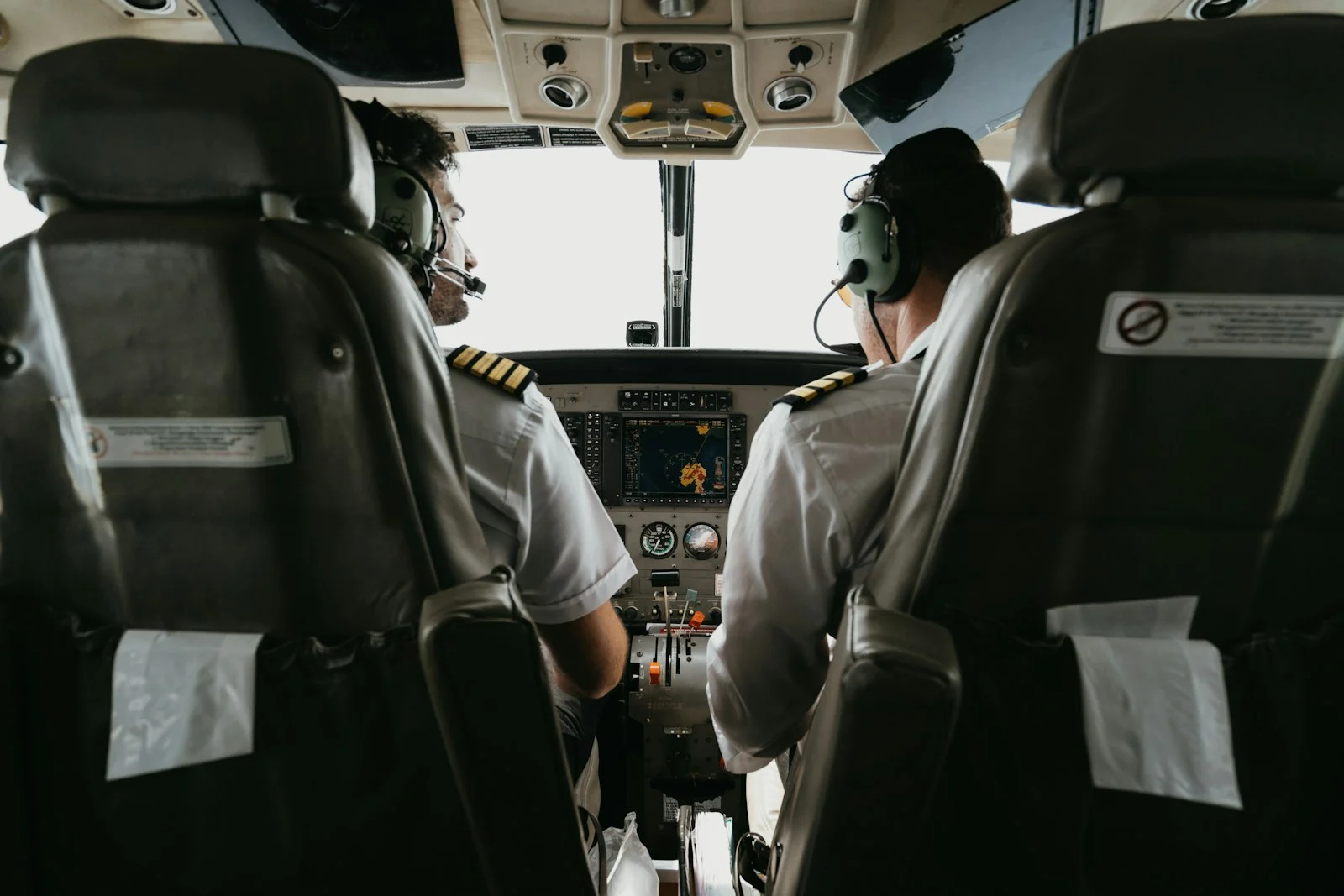
ICAO Level 4 to Level 5: how a first officer got there
ICAO Level 4 is the minimum to fly internationally. This post follows a first officer through the five hurdles between Level 4 and Level 5.
-
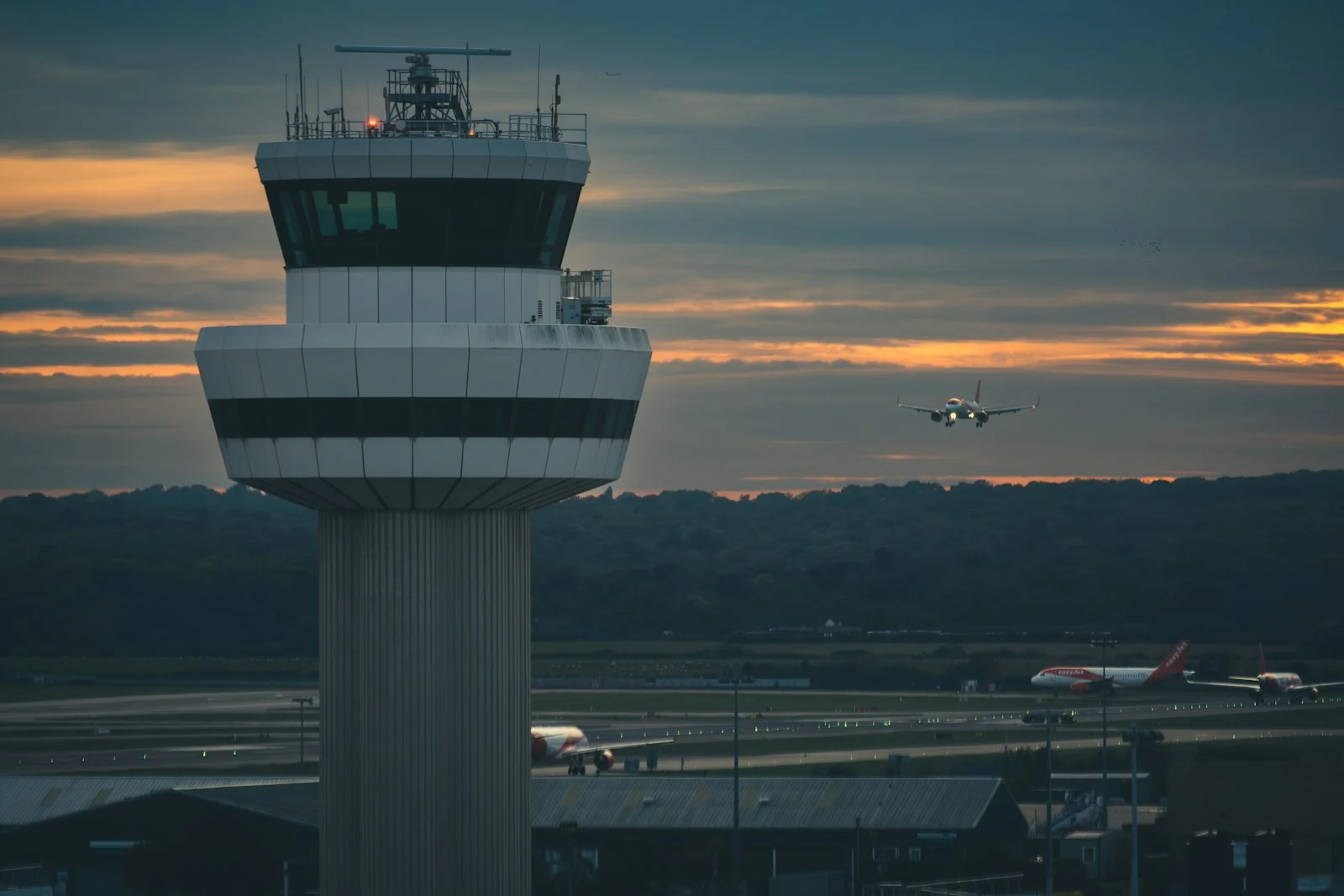
Native English speakers should sit pilot language tests, study says
A study of a 20-minute runway blockage at Incheon argues the native-speaker exemption from ICAO language testing cannot be justified.
Fees
Fees
Simple and published. Prices are in pounds sterling. Two routes: one-to-one lessons, and written speaking reports where I send you the task materials and you record them in your own time. Both include detailed feedback against all six descriptors.
Placement call
Free
20 minutes
A real placement, not a sales call. It tells you where you are, not what to buy.
- Short interview and one scenario
- Listening check
- Honest view of your current level
Single lesson
£35
per 60 minutes
Pay as you go, for topping up or troubleshooting.
- One-to-one, online
- Tailored materials
- Homework and written feedback
Most popular
Ten lesson package
£320
10 x 60 minutes
The usual way to move a descriptor, and the best value.
- Full written diagnostic
- Lesson recordings
- One mock assessment included
- Progress review at lesson five
Live mock assessment
£75
60 minutes + report
For crew with a test date already booked who want the pressure of the real thing.
- Test-format simulation with a live assessor
- Recording provided
- Descriptor scores and estimated rating
Full speaking report
£59
full test format, 5 working days
The whole test format marked and returned in writing. I send you the task materials and you record them in your own time, so there is nothing to book.
- Four tasks sent to you, in the format of the test you are sitting
- Six descriptor scores and an estimated ICAO rating
- A written report, usually four to five pages
- A prioritised plan for the weeks before your test
Single task report
£29
one task, 5 working days
One task marked in full, for crew who already know which part goes wrong.
- I send you the task materials after payment
- Marked against all six descriptors
- The exact phrases that cost you marks
- Nothing to schedule - record it in your own time
Report and follow-up round
£89
two rounds, 5 working days each
A second set of questions written from what you actually said. Interactions cannot be rated from a monologue, so this is the only written route that covers it properly.
- Everything in the full speaking report
- Follow-up task materials built from your first recording
- A second report covering both rounds
- Still nothing to schedule - you record both rounds in your own time
Test-ready pack
£149
three full reports
Three reports across the weeks before your test, so you can see whether the fixes are holding.
- Three full speaking reports
- New task materials sent each time, recorded in your own time
- Progress tracked descriptor by descriptor
- Use them any time within three months
Priority turnaround
+£19
48 hours, not 5 working days
Added to any report above. Marking takes as long as it takes, so this buys you a place at the front of the queue, not a shorter report.
- Report back within 48 hours
- Available on any single report
- Tell me your test date before you pay if it is inside a week
Airline and academy groups
On request
per cohort
Placement testing, shared syllabus, reporting for your training manager.
- On-site or online
- Progress reports for management
- Invoiced to the company
Questions people actually ask
Can you guarantee I will get Level 4?
No, and you should be careful with anyone who does. I do not put you forward for a test until a full mock assessment says you are ready, and I will tell you honestly if you are not there yet.
How long does it take to move from Level 4 to Level 5?
For most people, three to five months of two lessons a week plus regular listening practice. It depends far more on the weakest descriptor than on your overall English.
Which tests do you prepare people for?
The common ICAO-compliant formats: TEA, ELPAC, RELTA, EALTS and authority-run interviews. Tell me which one your authority accepts and we will train in that format.
What happens in a lesson?
Roughly: a listening warm-up on real ATC audio, targeted work on your weakest descriptor, a non-routine scenario in role play, then feedback and homework. Lessons are recorded if you want them to be.
Which platform, and which time zones?
Lessons run on Zoom. I am in London (UTC or UTC+1) and keep early morning, evening and weekend slots for crew on rotation.
Do you teach anything other than aviation English?
Yes. IELTS across all versions, Cambridge exams, business and legal English, interview and CV coaching, and GCSE and A-Level English Literature and History.
How does a written speaking report work?
You pay, I send the exercise, you record your answers on your phone in one take and send the video back. Within five working days you get a written report with scores against all six descriptors, an estimated rating and the specific things to fix. There is nothing to book and no time zone to work around.
Why do I only get the exercises after I pay?
Because a rehearsed answer tells me nothing about how you will perform on the day. The prompts used for assessment are held back and never published. The free practice exercises are a separate set, and you are welcome to work through those beforehand.
Can you rate Interactions from a recording?
Not from a single monologue, and I will not pretend otherwise. The full report includes a transmission with something in it that does not add up, so readback correction and asking for clarification become visible. If you want Interactions marked properly, take the two round option, where the follow-up questions are written from what you actually said.
What if I read my answers from a script?
The report will say so and you will not get an estimated rating. Recordings must be one take with the camera on and your face visible, started within a minute of opening the prompt. This is not about trust. A scripted answer simply cannot be marked for Fluency or Interactions.
How fast is the turnaround, and can I get it sooner?
Five working days as standard, and most come back sooner. If your test is close, priority turnaround puts you at the front of the queue for a report inside 48 hours, for £19 on top. Tell me your test date before you pay if it is inside a week, so I can say honestly whether I can help.
What if the recording is unusable, or you miss the deadline?
Full refund in both cases, no argument. There is no satisfaction guarantee on a report that has already been written, because an honest low rating is still the thing you paid for.
How do I pay?
Bank transfer or an invoice for company-funded training. Written speaking reports are paid up front, before the exercise is sent. Packages are paid up front; single lessons before the lesson. Cancel or move a lesson with 24 hours notice at no charge.
What is the ICAO English language proficiency test?
It is the licence check on your radiotelephony English. It does not measure general English: it rates six skills - pronunciation, structure, vocabulary, fluency, comprehension and interactions - against the ICAO rating scale, and your overall level is the lowest of the six. Pilots and controllers working international operations need Level 4 as a minimum.
What is the difference between Level 4, 5 and 6?
Level 4 is operational: you cope with routine work and can usually clear up a misunderstanding. Level 5 is extended: unexpected turns in a conversation cost you far less effort. Level 6 is expert, near enough native command. Level 4 and 5 have to be revalidated, typically every three and six years, while Level 6 is normally granted for good. Your authority sets the exact intervals, so check what applies to your licence.
How long does the test take?
Most formats run for roughly twenty to forty minutes. Expect an interview about your operational background, listening tasks, description of a picture or situation, and a non-routine scenario where you have to talk your way through a problem without standard phraseology. Some formats are run with an examiner in person or online; others include computer-based listening sections.
Can a non-native speaker really reach Level 6?
Yes. Level 6 is not a test of accent and you are not being asked to sound British or American. It rewards range, precision and the ability to keep going when a situation stops being routine. It takes longer than Level 4 or 5 and it is not the right target for everyone, but it is reachable, and I will tell you honestly whether it is realistic for you.
How is this different from a general English course?
A general course builds broad English. This builds the specific thing you are rated on: plain English that works alongside standard phraseology when something goes wrong. The material is real ATC audio, incident reports and role plays from the flight deck and the tower, not textbook dialogues about holidays and hobbies.
How long should I prepare?
It depends on where you are starting and how often you can work. As a rough guide, a solid Level 3 aiming at Level 4 usually needs a couple of months; Level 4 to Level 5 more like three to five; Level 6 longer again. A mock assessment in the first week or two will give you a far better estimate than any average.
What happens if I do not pass?
Below Level 4 you cannot exercise your radiotelephony privileges internationally until you retake and pass, so the licence is effectively on hold. There is no limit on retakes, but sitting the test again without changing anything rarely helps. We would go through the examiner feedback, work out which of the six descriptors pulled the score down, and target that.
Get started
Book the free placement call
Tell me your role, the rating you need and roughly when you have to sit the test. I reply to every message myself, usually within one working day.
- Based in London, UK - teaching online worldwide
- Hours Any time zone, by arrangement