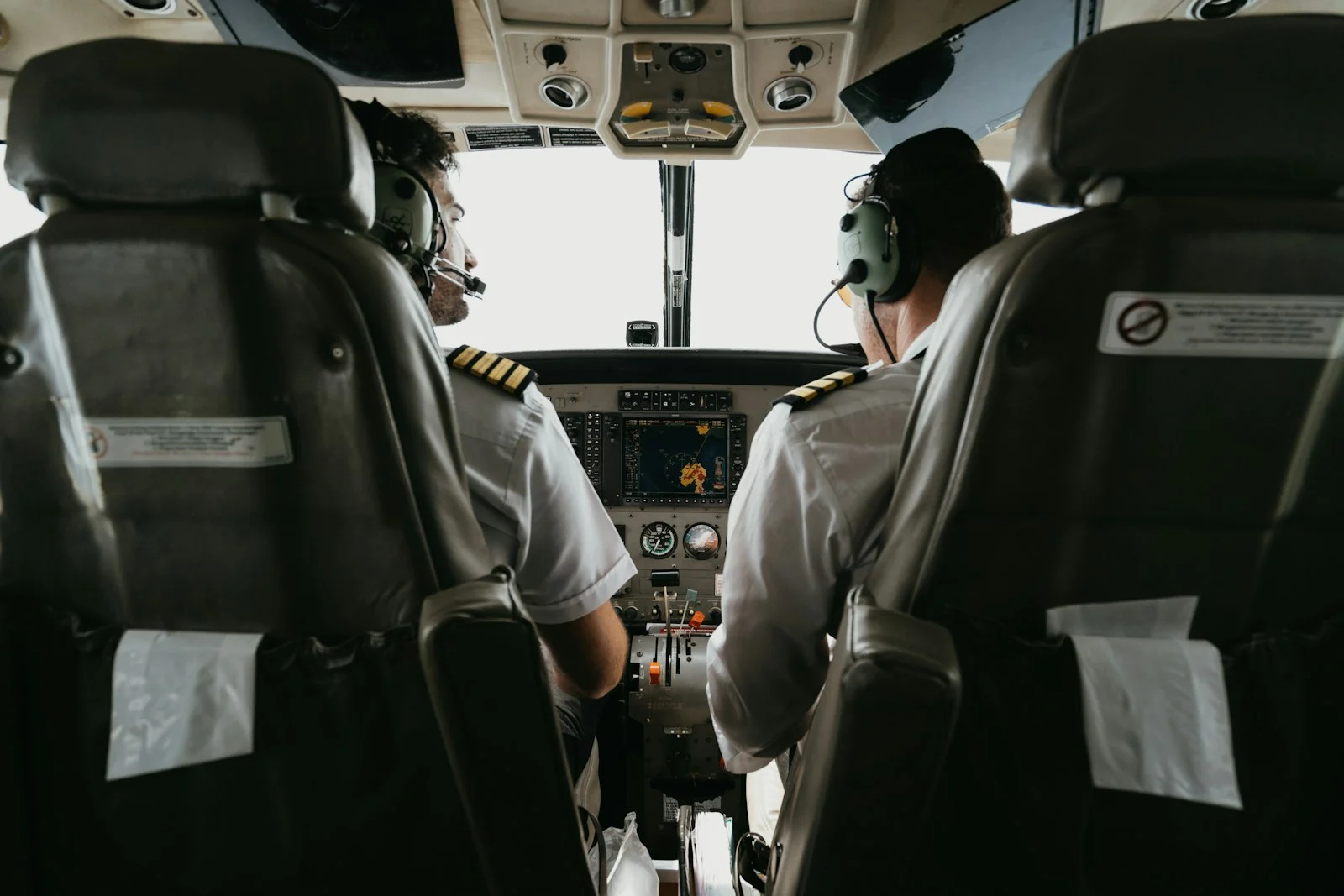
EUROCONTROL has published the results of every ELPAC test sat in the first half of 2026, up to 15 June. The headline figure is the failure rate: 15% of the 703 pilots and 16% of the 767 air traffic controllers finished below Level 4, the minimum for international radiotelephony.
If you are a pilot, the number I would watch is a different one: 44% of pilots finished exactly on Level 4.
Controllers did much better above the line. Only 19% of them stopped at Level 4, while 42% reached Level 5 and 23% reached Level 6. Among pilots, 28% reached Level 5 and 12% reached Level 6. Two controllers in three cleared Level 5, against four pilots in ten.
Pilots who stop at Level 4 sit the test more often. ICAO recommends reassessing Level 4 every three years. EASA gives pilots four years under FCL.055, and the date on your licence is the one that binds you, whatever ICAO recommends. Both bodies put Level 5 at six years. Over a 30-year career on an EASA licence, a pilot who stays at Level 4 sits the test seven or eight times, and a pilot at Level 5 sits it five times.
ELPAC's assessors need to find only one weak criterion to hold you at Level 4. Two of them rate the speaking paper live: an English language expert, and an operational expert who is or was a controller or pilot. They score pronunciation, structure, vocabulary, fluency, comprehension and interactions separately, and your level is the lowest of the six. ELPAC's results page says there is no compensatory marking, so a 5 in one criterion cannot lift a 4 in another. When the two assessors disagree, a third assessor reviews the recording, and ELPAC treats that decision as final.
You cannot see the shape of a result in the overall level.
Anglo-Continental, the Bournemouth school, publishes assessor notes on a sample candidate from its own test, TEAP, which it scores on the same ICAO scale. He scored 5 for pronunciation and 4 for the other five criteria, so his overall level was 4. The assessors wanted more detail in his reports before they would give comprehension a 5. In interactions, he needed to steer the conversation more himself. They judged his frequent fillers harmless and still marked fluency at 4.
That candidate had five criteria to move. A pilot in ELPAC's 44% might look like him, or might hold five 5s and a single 4 in structure. Both pilots hold Level 4, and the second has far less work to do.
I cannot take the ELPAC figures any further. EUROCONTROL averages them across all its user organisations and does not break them down by criterion or by country, so I cannot tell you which criterion held the 44% at Level 4, or why controllers scored so much higher. Candidates sit ELPAC through those organisations, so private candidates who book their own test elsewhere may not look like this sample.
If your next ELPAC is due within a year, ask your training department whether your last report lists all six criterion scores, and get them before you book any lessons. With only Level 4 on the report, you have no way to tell where to start.
References
- EUROCONTROL (2026). ELPAC: Results, re-sits and appeals. Score distribution, January–15 June 2026.
- Anglo-Continental (2011). Sample TEAP candidate: notes on individual descriptors.
- SKYbrary (2026). English Language Proficiency (ELP) Requirements.
Photo: Pattharapong Sittirach, CC BY 2.0, via Wikimedia Commons.